

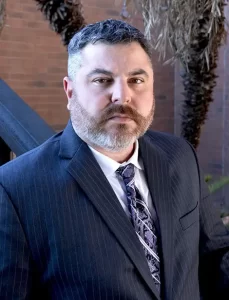

Craig J. Rosenstein
Defective Drug Recalls Lawyer
He is a well-respected criminal defense attorney in the legal community. Craig is one of the only three Board Certified DUI Law Specialists in Maricopa County and one of the only five in the state of Arizona. Craig is known in the legal community as an aggressive and skilled trial attorney, which has earned him notoriety on prominent cases, but he takes the most pride in the fact that when Judges, Officers, and Prosecutors find themselves, their families, or friends in need of a criminal attorney, he is very often the one with whom they seek assistance personal injury law.
Craig has been on the Arizona Attorneys for Criminal Justice (AACJ) board from 2014-present and its elected President in 2018. He has helped form, is an active Legislative Committee member, and chairs the PAC Committee. He works tirelessly to push forward the agenda of improving the criminal justice system in Arizona. Most recently, he consulted on the Safer Arizona (Marijuana De-Criminalization ballot initiative 2020) to assist in creating sound public policy regarding impaired driving infractions from marijuana and to help ensure the rights of the accused. Craig’s efforts also include drafting legislation that has been sponsored by State legislators that seeks to reform criminal justice in Arizona. His office was single-handedly responsible for drafting a bill. It was instrumental in shepherding that bill through the Legislature and eventually got it signed by the Governor and passed into law

Diego Brito
Defective Drug Recalls Lawyer
Diego F. Brito is a bilingual (Spanish) Litigation Associate who joined our firm in September 2024, bringing a wealth of experience in both commercial litigation and family law. A graduate of the Sandra Day O’Connor College of Law at Arizona State University, Diego earned his Juris Doctorate in 2021. He also holds a Bachelor of Science in Entrepreneurial Studies, cum laude, from Grand Canyon University.
Prior to joining our team, Diego worked as an Associate Attorney at Davis Miles, PLLC, where he managed a diverse portfolio of cases, including breach of contract, partnership disputes, negligence, fraud, and quiet title actions. His expertise extends to both trial and appellate litigation, in which he prepared a variety of motions and briefs on complex legal issues.
Diego also represented clients in family law cases involving dissolutions of marriage, child custody, child support, and spousal maintenance. His deep understanding of litigation, combined with his strong negotiation skills, allowed him to successfully represent clients in mediations, hearings, and trials.
Diego is a native Spanish speaker as his parents emigrated from Mexico and Ecuador. During his free time, Diego enjoys playing and watching basketball, drawing portraits, and working on cars (he has a keen interest in lowriders and Japanese sports cars from the 90s). Diego also holds a black belt in taekwondo having participated in many tournaments across the nation during his childhood and early adolescence.
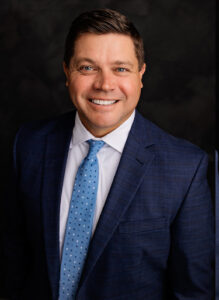
Gabe Sassin
Defective Drug Recalls Lawyer
Gabe Sassin grew up in Texas and attended Texas A&M University. After earning his Bachelor’s Degree in Political Science with a minor in History, Gabe worked for two years in Washington, DC for a US Congressman before moving to Oklahoma to attend law school. Upon graduating in 2007, Gabe moved back to Texas to begin his legal career.
Gabe is a Texas trial lawyer whose legal focus has always been in the area of medical malpractice. He started his career representing doctors and hospitals, including primary counsel to one of the largest orthopedic surgery groups in the Houston area. Over his career, Gabe has handled hundreds of cases involving personal injury, medical malpractice, premises liability, products liability, construction accidents, motor vehicle accidents, trucking accidents, and wrongful death.
Gabe Sassin handled this medical malpractice case against a major Texas hospital and pediatrician involving allegations that the nursing staff and pediatrician failed to properly diagnose and treat necrotizing enterocolitis, a deadly intestinal disease, in a newborn. As a result, our client lost her daughter to a disease that when timely recognized can be treated and most infants make a full recovery. The case was settled before trial for a confidential amount.
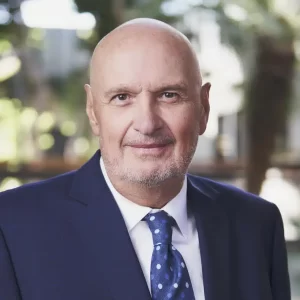
Martin H. Mathers
Defective Drug Recalls Lawyer
Martin is one of the country’s leading trial attorneys, obtaining significant settlements and jury verdicts for injury victims. He is a Certified Specialist in Personal Injury and Wrongful Death.
Because of his expertise in personal injury, wrongful death, and other catastrophic injury cases, Martin is contacted by lawyers throughout the country to help them with their cases. This has led to Martin’s involvement in litigation involving high-profile celebrity defendants, large hospital systems, prominent business people, airplane crashes, pharmaceutical errors, and defective product cases.
Professional Associations
- Arizona Trial Lawyers Association
- Arizona Association for Justice, Board of Directors, 1992 to Present
- Arizona Association for Justice, Peoples Law School, Moderator, 1991 to 1993
- State Bar of Arizona, Member
- State Bar of Arizona, Civil Practice and Procedure Committee, 1988 to 1991
Current Employment Position
- Certified Specialist in Personal Injury and Wrongful Death
Past Positions
- Maricopa County Superior Court, Maricopa County Judge (Pro Tempore), 1999 to 2009
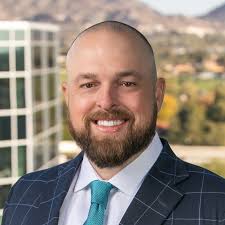
Matthew R. Boatman
Defective Drug Recalls Lawyer
Matt is a distinguished legal practitioner specializing in complex and catastrophic personal injury and wrongful death cases. With a dedicated focus on cases arising from motor vehicle accidents, medical malpractice and negligence, defective products, unsafe premises, and insurance coverage disputes, Matt brings a wealth of expertise and advocacy to his clients’ needs.
Having played a pivotal role in a multitude of high-profile cases, Matt has prominently served on trial teams handling cases of significant societal impact. Noteworthy examples include his contributions to the legal representation of the survivors of the Yarnell, Arizona Hotshot Firefighters’ tragedy, his involvement in multi-district product liability litigation against industry leader C.R. Bard, and his participation in the Cook multi-district litigation concerning defective vena cava filters. Matt’s track record boasts remarkable successes in securing multi-million-dollar settlements on behalf of clients who have suffered severe injuries (or death) due to defective vehicles and catastrophic accidents.
Outside of the firm, Matt finds fulfillment in his personal pursuits. He cherishes quality time spent with his wife and daughter, and enjoys being physically active through golfing, weightlifting, and racquetball.

Carl Engstrand
Defective Drug Recalls Lawyer
Since 2013, Carl has been a steadfast advocate for injured plaintiffs, dedicating his entire career to personal injury law on behalf of the plaintiffs. Graduating with a B.A. from the University of Arizona in 2008 and a J.D. from the University of the District of Columbia in 2013, Carl embarked on his journey of building and winning personal injury cases in Maricopa County, Arizona, where he continues to excel.
From the onset, Carl demonstrated his ability to scale a law firm’s legal services revenue model across multiple markets and branded products. Along the way, he achieved remarkable milestones, including resolving several seven-figure cases. Carl’s versatility extended beyond legal expertise, as he handled diverse responsibilities such as licensing, Human Resources, business development, product management, cash flow management, and team morale management. He was even involved in assembling office furniture, albeit with the occasional mishap. Breaking just one desk is a testament to his determination and resourcefulness.
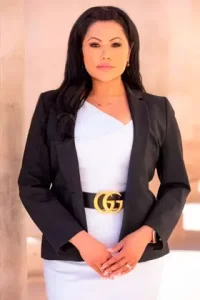
Michelle Villanueva-Skura Esq
Defective Drug Recalls Lawyer
Michelle earned her bachelors from the University of Miami in 1997. During her undergraduate years, Mrs. Skura studied abroad at the University of Oxford. Upon completing her undergraduate degree, Michelle worked as a licensed litigation examiner settling thousands of complex injury and wrongful death claims. Michelle left her career in claims to earn her Juris Doctorate graduating at the top of her class while receiving multiple CALI Excellence for the Future Awards for her achievement in subjects such as Insurance Litigation and Constitutional Law.


Does the FDA Have the Authority to Mandate a Recall?
The U.S. Food and Drug Administration (FDA) is the nation’s primary regulatory agency for ensuring the safety and efficacy of food, drugs, medical devices, cosmetics, and other consumer products. When a product regulated by the FDA is found to be defective, contaminated, or otherwise potentially harmful, a recall may be necessary to protect public health. However, the FDA’s legal authority to mandate a recall varies depending on the type of product involved. Understanding when and how the FDA can require a recall is essential for consumers, manufacturers, and healthcare professionals alike.
What Is a Recall?
A recall is an action taken to remove a product from the market or correct a product that violates laws administered by the FDA. Recalls are intended to protect the public from products that present a risk of injury, illness, or death. Recalls may involve returning the product to the manufacturer, correcting the issue in the field, or simply providing additional information to consumers and healthcare providers.
FDA’s General Recall Process
In most cases, recalls are initiated voluntarily by the manufacturer or distributor of the product. The FDA may learn about a potential problem through its own inspections, adverse event reports, or notifications from manufacturers, healthcare providers, or consumers. When a problem is identified, the FDA works with the company to ensure that the recall is conducted effectively and that the public is informed.
The FDA classifies recalls into three categories based on the level of risk:
Class I Recall: The most serious type, involving products that could cause serious health problems or death.
Class II Recall: Involves products that might cause a temporary health problem or pose only a slight threat of a serious nature.
Class III Recall: Involves products that are unlikely to cause any adverse health reaction but violate FDA labeling or manufacturing laws.
Does the FDA Have Mandatory Recall Authority?
The FDA’s ability to mandate a recall—meaning to legally require a company to remove a product from the market—depends on the product category.
1. Prescription and Over-the-Counter Drugs
For most prescription and over-the-counter drugs, the FDA does not have explicit authority to mandate a recall. Instead, the agency relies on manufacturers to voluntarily recall products that are found to be defective or dangerous. The FDA can request a recall and provide guidance, but it cannot force a company to act in most drug-related cases.
If a manufacturer refuses to recall a dangerous drug, the FDA does have other enforcement tools at its disposal, such as:
Seizing the product through court action
Seeking injunctions to stop distribution
Issuing public warnings
However, these actions are generally more time-consuming and less direct than a mandatory recall.
2. Medical DevicesThe FDA does have the authority to mandate a recall of medical devices under certain circumstances. If a device is found to present a risk of serious injury or death and the manufacturer does not voluntarily recall it, the FDA can issue a mandatory recall order under Section 518(e) of the Federal Food, Drug, and Cosmetic Act. Before doing so, the FDA must give the company an opportunity for an informal hearing. If the company still refuses to act, the FDA can order the recall.
3. Food Products
The FDA’s authority to mandate recalls of food products was significantly expanded by the Food Safety Modernization Act (FSMA) of 2011. Under FSMA, the FDA can order a mandatory recall if it determines that there is a reasonable probability that a food (other than infant formula) is adulterated or misbranded and that the use of the food will cause serious adverse health consequences or death. The FDA must first give the company an opportunity to voluntarily recall the product. If the company does not act, the FDA can issue a mandatory recall order.
4. Infant Formula, Biologics, and Tobacco Products
Infant Formula: The FDA has mandatory recall authority if the formula is found to be adulterated or misbranded.
Biologics: For certain biological products, the FDA can require a recall if there is a risk to public health.
Tobacco Products: The FDA can mandate a recall if a tobacco product presents a serious risk.
Why Doesn’t the FDA Have Mandatory Recall Authority for All Products?
The lack of mandatory recall authority for drugs is largely a result of how the laws governing the FDA have evolved. Congress has historically given the FDA more limited powers over drugs, relying on the threat of public exposure and market forces to encourage compliance. In contrast, high-profile food safety incidents and device failures have led to broader recall powers in those areas.
How Does the FDA Oversee Recalls?
Even when a recall is voluntary, the FDA plays a critical oversight role. The agency:
Reviews the company’s recall strategy and communications
Monitors the effectiveness of the recall
Classifies the recall based on health risk
Notifies the public through recall announcements and its website
If a company fails to adequately recall a dangerous product, the FDA can take additional enforcement actions to protect the public.
Conclusion
The FDA’s authority to mandate a recall is not universal. For most drugs, the agency must rely on manufacturers to voluntarily remove unsafe products from the market, although it can take other enforcement actions if necessary. In contrast, the FDA has clear authority to require recalls of medical devices, food, infant formula, certain biologics, and tobacco products when public health is at risk. This patchwork of authority reflects the complex history of food and drug law in the United States. Ultimately, the FDA’s oversight—combined with the cooperation of responsible manufacturers—remains essential to ensuring the safety of the nation’s food and medical supply.