
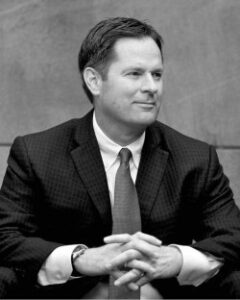

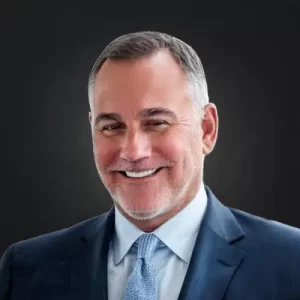
Tom D’Amore
Defective Drug Recalls Lawyer
Tom D’Amore and his associates have earned a reputation among insurance companies, corporations, and opposing counsel as experienced, aggressive and ethical personal injury attorneys personal injury law.
Tom D’Amore is a trial lawyer dedicated to preserving the civil justice system. Tom has earned a reputation among insurance companies, corporations, and opposing counsel as a skilled, experienced, aggressive, and ethical personal injury attorney. Tom is an experienced and board-certified civil trial attorney with the National Board of Trial Advocacy. Tom was selected by Super Lawyers and his peers as one of the Top 50 lawyers in Oregon. Tom and D’Amore Law Group are AV Preeminent rated for the highest ethical standards and professional ability by Martindale-Hubbell. In 2016, Tom was awarded the Arthur H. Bryant Public Justice Award by the Oregon Trial Lawyers Association (OTLA).
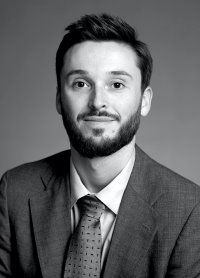
JON D. FRIEDMAN
Defective Drug Recalls Lawyer
Jon D. Friedman is an attorney who seeks common-sense solutions to help clients from the day they meet through the resolution of their cases. If the case cannot be resolved short of filing a lawsuit, he is an experienced litigator who is licensed to pursue results in both State and Federal Court.
Born and raised in Portland, Oregon, Jon graduated from Willamette University with a Bachelor of Arts in politics. Before attending Lewis & Clark Law School, Jon worked in Oregon and Federal politics and for an after-school non-profit organization serving underserved communities. These experiences helped Jon recognize his desire to pursue a career helping others, which he remains devoted to today.
In his free time, Jon enjoys basketball, live music, and movies.
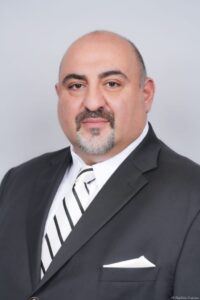
ALEXANDER MCTARIAN
Defective Drug Recalls Lawyer
Alexander obtained his Bachelor of Arts degree in University Studies with a concentration in Biology and Business from the University of New Mexico in 2009. Soon after graduation, he moved to Newport Beach, California and attended Whittier Law School where he was able to obtain his Juris Doctorate in 2014. Alexander was on the Dean’s List and Honor Roll while attending Law School.
Upon receipt of his JD, Alexander and his family moved to Albuquerque, New Mexico where he passed the Bar Exam and practiced law for one year establishing himself within the legal community as an aggressive criminal defense lawyer and avid trial lawyer. Alexander move to Las Vegas, Nevada where he established Nevada Legal Group in 2017 and has been residing there ever since. He began practicing business law representing the interests of hundreds of small businesses in the Las Vegas valley. Shortly thereafter, Alexander discovered a passion for the field of Personal Injury and expanded his practice. Not long after, the firm also expanded to provide immigration legal services. Alexander prioritizes pro-bono work and provides hundreds of hours of free legal services.
Dave Eltringham, Esq.
Defective Drug Recalls Lawyer
Dave is the Founder of the Eltringham Law Group, a personal injury law firm dedicated to representing injured victims against insurance companies. His practice focuses primarily on trucking and auto accidents, motorcycle accidents, and premises liability.
As a recent survivor of severe personal injuries, Dave has a unique understanding and perspective on the harms and losses needlessly inflicted upon his clients. He is incredibly grateful for the opportunity to continue his practice and leverages the wisdom and pain of his experience every day to transform the lives of the firm’s clients, ensuring they receive the justice they deserve.
Dave attended the University of Southern California for his undergraduate studies and completed his J.D. at the Benjamin N. Cardozo School of Law, Yeshiva University in New York City. He is licensed to practice law in Florida, Oregon and New York.
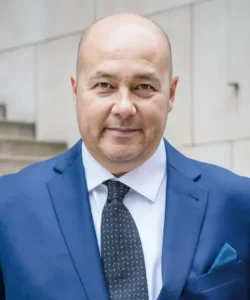
Richard Rizk
Defective Drug Recalls Lawyer
Richard Rizk, senior lawyer at Rizk Law, was born in Manhattan to young medical professionals. His father, a doctor who immigrated from Egypt, and his mother, a nurse from small-town Indiana, lived in a small Bronx apartment on a shoestring budget when they welcomed their baby boy. Unfortunately, it wouldn’t be long after Richard’s birth that his family would be forced out of the country due to a lapse in his father’s visa.
Unable to return to his father’s home country because the dictator had seized his family’s assets, they journeyed to the South American jungle. For the next few years, Richard’s parents operated a sparsely equipped medical clinic in Kwakwani, Guyana, until they could return to the United States years later.
“…we left the urban jungle for the real jungle of Guyana where I learned to walk, swim and talk. I was stalked by a boa constrictor and swam with piranha in the local river. Whenever I face hard times, I think of obstacles my parents faced in those early days of my life.” – Richard Rizk
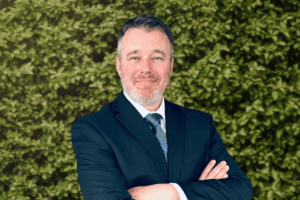
Richard Oberdorfer
Defective Drug Recalls Lawyer
If there was ever a posterchild for the statement ‘don’t mistake kindness for weakness’, Rich Oberdorfer would be that person! Rich is one of the most kind-hearted and genuine people we know, and at the same time, he is widely recognized as one of the foremost DUI attorneys in Oregon.
Rich has more than 20 years of experience representing people facing DUI and other charges, and he is often sought after to train lawyers from other law firms about the ever-changing landscape of Oregon’s DUI laws. He has testified before the Oregon legislature on proposed DUI-related laws, and he regularly presents and contributes to the Oregon Criminal Defense Lawyer’s Association’s conferences and publications on various DUI-related topics. In addition to his role as an incredible advocate for his clients, Rich has also served as a judge, presiding over courtrooms in several local jurisdictions.
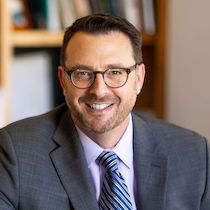
Matthew D. Kaplan
Defective Drug Recalls Lawyer
Mr. Kaplan began his legal career as a Law Clerk for the Honorable Judge Sidney Galton. While working at the Multnomah County Courthouse he observed a multitude of trials and developed valuable relationships with judges, court staff, and other attorneys. In 1998, Mr. Kaplan took his first job as a Trial Attorney working at the Southern Oregon Public Defenders. After working a year and a half in Medford, Oregon, Mr. Kaplan returned to Portland to work as an Associate Trial Attorney for Squires & Lopez where he represented defendants charged in all level of criminal cases, ranging from traffic violations to the most serious felonies. He also developed a civil practice representing victims of automobile accidents.


Who is Responsible for Initiating a Drug Recall?
Introduction
Drug recalls are a crucial aspect of public health protection. When a medication is found to be unsafe, contaminated, mislabeled, or otherwise defective, swift action is needed to remove it from the market and prevent harm to patients. But who actually initiates this process? Is it the responsibility of the drug manufacturer, the government, or another entity? Understanding the roles and responsibilities in drug recalls sheds light on how our healthcare system works to keep consumers safe.
What is a Drug Recall?
A drug recall is an action taken to remove a prescription or over-the-counter medication from the market because it is found to be defective or potentially harmful. Recalls can be triggered by a variety of issues, including:
Contamination (microbial, chemical, or foreign objects)
Incorrect labeling or packaging
Incorrect potency (too strong or too weak)
Adverse side effects not previously identified
Manufacturing errors
The goal of a recall is to minimize risk to patients and the public by removing the problematic product from distribution and use as quickly as possible.
Who Can Initiate a Drug Recall?
1. The Drug Manufacturer (Voluntary Recalls)
In the vast majority of cases, the drug manufacturer or distributor is the first to identify a problem with a pharmaceutical product. This can happen through:
Internal quality control checks
Reports from healthcare professionals or patients
Post-marketing surveillance data
Adverse event reporting systems
When the manufacturer discovers an issue that could compromise patient safety, they are responsible for notifying the U.S. Food and Drug Administration (FDA) and initiating a recall. This is known as a voluntary recall.
Why do manufacturers initiate recalls voluntarily?
To protect public health and safety
To comply with legal and regulatory requirements
To maintain consumer trust and avoid further liability
Manufacturers are required by law to report certain types of problems to the FDA, especially those that could result in serious health consequences or death.
2. The FDA (Requested or Mandated Recalls)
While most recalls are initiated by manufacturers, the FDA plays a critical oversight role. The FDA can:
Request a recall: If the FDA becomes aware of a problem (through adverse event reports, inspections, or other means) and believes a recall is necessary, it can formally request that the manufacturer initiate a recall.
Mandate a recall: In rare cases—typically when a manufacturer refuses to recall a dangerous product—the FDA has the legal authority to mandate a recall. This is more common with food products, but the FDA can also mandate recalls for certain drugs, especially biologics and controlled substances.
The FDA’s authority to mandate a recall is outlined in the Federal Food, Drug, and Cosmetic Act (FD&C Act) and other federal regulations.
3. Other Stakeholders
Other parties can play a role in the recall process, including:
Healthcare professionals: Doctors, pharmacists, and nurses may be the first to notice adverse effects or problems with a drug and report them to the manufacturer or the FDA.
Consumers: Patients or caregivers can report problems directly to the FDA through the MedWatch program, which may trigger an investigation and eventual recall.
Wholesalers and Distributors: Entities in the supply chain may also identify issues and alert manufacturers or regulators.
The Drug Recall Process: Step-by-Step
1. Detection of a Problem
The process begins when a problem is detected, either by the manufacturer, the FDA, a healthcare professional, or a consumer. This could be due to:
Routine quality testing
Adverse event reports
Inspection findings
New scientific data
2. Notification and Assessment
If a manufacturer identifies a problem, they must notify the FDA. The FDA will then assess the risk and determine the appropriate classification for the recall:
Class I: A dangerous or defective product that could cause serious health problems or death
Class II: A product that might cause a temporary health problem or pose a slight threat of a serious nature
Class III: A product that is unlikely to cause any adverse health reaction but violates FDA labeling or manufacturing laws
3. Recall Initiation
Voluntary Recall: The manufacturer begins the recall process, notifies all relevant parties (distributors, pharmacies, hospitals), and develops a recall strategy in coordination with the FDA.
FDA-Requested or Mandated Recall: If the manufacturer does not act, the FDA can request or require a recall.
4. Public Notification
Depending on the severity and scope of the recall, the FDA may issue a public alert through press releases, its website, and other channels. Healthcare providers and pharmacies are also notified.
5. Product Removal
The recalled product is removed from shelves, pharmacies, hospitals, and wherever else it may be in the supply chain. Patients are advised to stop using the medication and return it if necessary.
6. Effectiveness Checks and Follow-Up
The FDA monitors the recall’s effectiveness, ensuring that the product has been removed from the market and that the manufacturer has taken corrective actions to prevent recurrence.
7. Recall Termination
Once the FDA is satisfied that all reasonable efforts have been made to remove the product and prevent harm, the recall is officially terminated.
The FDA’s Role in Oversight
The FDA’s primary responsibility is to protect public health by ensuring the safety, efficacy, and security of drugs. In the context of recalls, the FDA:
Reviews and classifies recalls
Monitors the manufacturer’s recall strategy and progress
Issues public notifications when necessary
Conducts follow-up inspections and investigations
Can mandate recalls in certain situations
The FDA maintains a searchable online database of all drug recalls, allowing healthcare professionals and consumers to stay informed.
Why Prompt Recalls Matter
Drug recalls are a critical safety net in the pharmaceutical industry. Prompt recalls:
Prevent further harm to patients
Minimize legal and financial liability for manufacturers
Maintain public trust in the healthcare system
Delays or failures in initiating recalls can have serious, even fatal, consequences and may result in regulatory penalties or lawsuits.
Conclusion
In summary, the responsibility for initiating a drug recall primarily rests with the drug manufacturer, who is often the first to detect a problem and has the legal and ethical obligation to act swiftly. However, the FDA plays a vital oversight and enforcement role, with the authority to request or mandate recalls when necessary. Healthcare professionals, consumers, and others in the supply chain also contribute to identifying and reporting problems. Together, these stakeholders form a comprehensive safety net to protect the public from defective or dangerous drugs, ensuring that when problems arise, they are addressed quickly and effectively.