
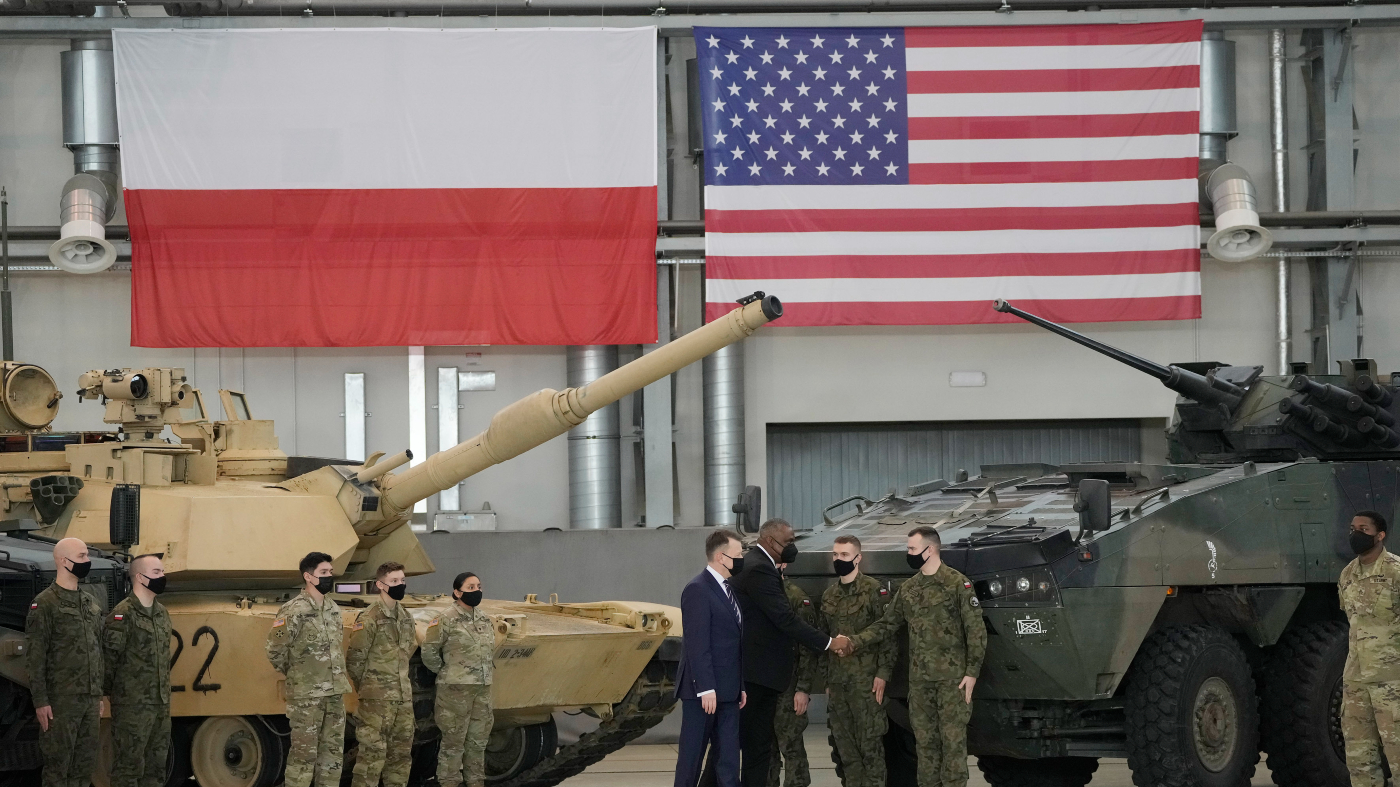
In recent years, growing tensions with Russia and persistent instability in Eastern Europe have thrust the question of American security guarantees into the spotlight. A series of national surveys — most notably the 2025 Chicago Council Survey — find a significant majority of Americans supporting the use of U.S. military forces to defend key allies, particularly Poland, if they are threatened by external aggression. According to the survey, 62 % of Americans favor using U.S. troops if Russia invades a NATO ally like Poland, with broad support across political affiliations. This support level is part of a wider trend backing defense commitments to NATO allies, even as attitudes vary depending on the specific scenario presented.
This article explores that public opinion, the historical and strategic reasons behind it, the implications for U.S. foreign policy, and the broader geopolitical landscape. We’ll also examine why Americans see defending Poland as a priority and how this view influences NATO dynamics, regional security, and future U.S. military strategy.
Table of Contents on Americans Support Using U.S. Troops to Defend Poland
-
Why Poland Matters in U.S. Security Strategy
-
Public Opinion: What Americans Think and Why
-
NATO and Collective Defense: The Legal Framework
-
Historical Path to U.S. Forces in Poland
-
Poland’s Role in Regional Security
-
The U.S.–Poland Military Partnership Today
-
Threat Perceptions: Russia and Eastern Europe
-
Foreign Bases, Forward Presence, and Deterrence
-
Partisan Views on Military Engagement
-
Future Scenarios and Strategic Debates
-
FAQs on Americans Supporting Defense of Poland
-
Conclusion
Why Poland Matters in U.S. Security Strategy
Poland is NATO’s largest army in Europe and plays a central role on the alliance’s eastern flank. Since Russia’s full-scale invasion of Ukraine in 2022, Warsaw has intensified its defense spending and cooperation with NATO partners, making it a frontline state in deterring potential aggression.
Strategic factors that elevate Poland’s importance include:
-
Geographic proximity to Russia and Ukraine
-
Its position as a gateway for military logistics and support
-
Hosting significant NATO and U.S. military infrastructure
-
Large defense budget — among the highest in NATO relative to GDP
-
Strong political will for robust transatlantic security ties
These elements make Poland not just a beneficiary of U.S. military support — but a cornerstone of broader European security architecture.
Public Opinion: What Americans Think and Why
62 % Back Troops for Poland
The 2025 Chicago Council Survey reveals that a solid majority of Americans would support sending U.S. troops to defend Poland if Russia invaded — 62 % overall across political lines. Even when presented with direct scenarios, Americans remain more supportive of deploying forces to defend frontline NATO allies than to intervene in non-NATO contexts.
Defensive Support Over Offensive Engagement
Americans show clear preferences in how U.S. military power should be used. Across multiple questions, the public prioritizes:
-
Defensive actions — such as protecting U.S. territory and defending allies
-
Preventing terrorism or proliferation
-
Support for NATO collective defense
This aligns with broader public sentiment favoring defense cooperation over unilateral offensive interventions.
Bipartisan Agreement
Support is notably cross-partisan, with both Democrats and Republicans expressing willingness to engage militarily if core U.S. interests or allied obligations — like Article 5 of the NATO Treaty — are triggered. Although Republicans tend to be slightly more open to military force generally, the defense of allied territory remains a bipartisan priority.
Preferences Linked to Threat Perceptions
Americans view threats from major powers — especially Russia — as direct threats to European stability and, by extension, U.S. national security. When asked about specific scenarios:
-
62 % support using troops if Russia invades Poland
-
55 % support using troops if Russia attacks the Baltic States
-
A majority recognize the importance of a U.S. forward presence and military bases in allied countries
This hierarchy signals that Europe’s defense still matters to the U.S. public.
NATO and Collective Defense: The Legal Framework
Article 5: Mutual Defense Commitment
Poland’s membership in North Atlantic Treaty Organization (NATO) is the central legal basis for U.S. support. Under Article 5 of the North Atlantic Treaty, an attack on one ally is considered an attack on all, triggering collective defense obligations. Although American public opinion is hypothetical, the legal framework guides actual policy and military planning.
U.S. Obligations and Public Backing
Americans broadly support the idea that the U.S. should honor its treaty commitments and uphold NATO’s collective defense principles. This sentiment exists even among voters who are wary of foreign entanglements in general — when it comes to defending allies like Poland, public support increases significantly.
Historical Path to U.S. Forces in Poland
From Rotational Forces to Expanded Presence
U.S. military involvement in Poland evolved gradually but consistently:
-
In the early 2010s, U.S. troops began rotational deployments to reassure NATO allies after Russia’s annexation of Crimea.
-
After Russia’s full-scale invasion of Ukraine in 2022, the U.S. significantly boosted forces and infrastructure in Poland.
-
By 2024–2025, over 10,000 American troops were deployed in Poland, forming part of NATO’s strategic deterrence posture.
Operations and Exercises
Joint training exercises, logistical deployments, and exercises like Operation Atlantic Resolve reinforced interoperability between U.S. and Polish forces — key for readiness and alliance cohesion.
Infrastructure and Bases
Poland now hosts significant American military infrastructure, including elements of the U.S. Army Forward Headquarters and stockpiles of prepositioned equipment, which enhance rapid response capabilities throughout Eastern Europe.
Poland’s Role in Regional Security
A Strategic Frontline State
Poland’s importance in regional security dynamics stems from its border with Belarus and proximity to Ukraine. With Russia’s military assertiveness in neighboring countries, Poland is increasingly seen as NATO’s eastern anchor.
Domestic Public Opinion in Poland
Polls indicate that a majority of Polish citizens believe the United States would defend them in the event of Russian aggression, reinforcing the importance of the U.S. security presence.
The U.S.–Poland Military Partnership Today
Expanded Troop Presence
The U.S. currently maintains a *significant military presence in Poland, projected to remain or grow further. This presence includes:
-
Rotational and permanent forces
-
Forward command units
-
Combined training and joint exercises
American officials have reaffirmed their commitment, stating that troop levels are not expected to decrease despite talks about broader force redistribution in Europe.
Deepening Cooperation
U.S. officials frequently praise Poland as a model NATO ally, citing Warsaw’s high defense spending and strategic contributions as essential to allied cohesion.
Allied Missions
While some NATO missions in Poland are multinational — like NATO’s air defense efforts with Dutch and German forces — the U.S. remains a key security guarantor on the eastern flank.
Threat Perceptions: Russia and Eastern Europe
Why Russia Is Central to the Debate
Russia’s invasion of Ukraine in 2022 fundamentally altered European threat perceptions, prompting nations like Poland to strengthen defenses and seek deeper cooperation with Washington. The spillover risks from Russian military actions heighten public and official anxiety about security, making defense guarantees to Poland politically salient in both countries.
American Perspective
Americans tend to view Russia as a long-term strategic competitor, and many see NATO’s eastern flank — including Poland — as a key front in deterring further aggression. This view reinforces public support for using U.S. military forces in defense scenarios.
Forward Presence, Deterrence, and Military Bases
The Importance of Forward Deployment
Maintaining a forward presence — troops stationed in allied countries during peacetime — serves as a deterrent by signaling commitment and readiness. Polls show that Americans support maintaining bases in Europe, including in Poland.
Forward Bases and Alliance Stability
Permanent or long-term bases increase interoperability, readiness, and rapid response capability. The expansion of U.S. forces in Poland underscores Washington’s interest in ensuring that NATO’s eastern flank remains secure.
Partisan Views on Military Engagement
Although overall support for defending Poland is broad, partisan nuances exist:
-
Republicans tend to be more supportive of robust military deployments in defense roles
-
Democrats support collective defense but may be more wary of open-ended commitments
-
Independents generally align with the broader public sentiment prioritizing defense of allies
Despite variations, the core finding — that a majority back defending Poland with troops if needed — holds across political divides, suggesting that NATO’s defense commitments enjoy durable support among the American public.
Future Scenarios and Strategic Debates
Increased Presence vs. Strategic Risk
As tensions persist in Eastern Europe and Russia maintains a large military presence near NATO borders, the strategic debate continues:
-
Should U.S. troops increase in Poland even more?
-
How to balance deterrence and escalation risk?
-
What role should NATO allies play in burden-sharing?
Technological and Non-Kinetic Dimensions
Cybersecurity, missile defense, and space capabilities are now integral to alliance defense planning. Poland’s geographic position and growing military infrastructure make it an important node for these capabilities as well.
Americans Supporting Defense of Poland
Q1: Why do Americans support using troops to defend Poland?
A: Many view defending a NATO ally as upholding treaty commitments and deterring Russian aggression, reflecting broad support for collective defense.
Q2: Is public support bipartisan?
A: Yes — majorities across political affiliations support using U.S. forces to defend Poland if needed.
Q3: How many U.S. troops are in Poland?
A: Over 10,000 U.S. service members are deployed in Poland as part of NATO’s enhanced deterrence posture.
Q4: Does Poland’s government want U.S. troops?
A: Yes — Polish leaders have expressed readiness to host more troops and value the U.S. presence.
Q5: What is NATO’s Article 5?
A: Article 5 commits allies to collective defense — an attack on one is an attack on all.
Q6: How has Russia’s invasion of Ukraine impacted opinions?
A: It heightened threat perceptions and reinforced support for defending European allies.
Conclusion
Americans’ support for using U.S. troops to defend Poland reflects not only strategic calculations, but also enduring commitment to collective defense and alliance obligations. With broad bipartisan backing, public opinion favors military preparedness and allied security cooperation that upholds NATO’s core principles.
As geopolitical competition deepens, the debate over troop deployments, deterrence architectures, and defense spending will continue to shape U.S. policy choices — both in Washington and in capitals across Europe.