
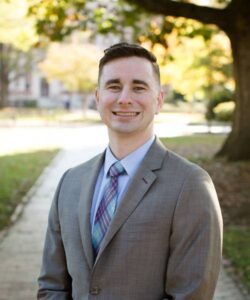

Aaron Jones
Defective Drug Recalls Lawyer
Attorney Jones represents clients in Orange, Harnett, Lee and Harnett Counties. Prior to joining iTicket.law Aaron was a jury consultant with Jury-X LLC, guiding trial attorneys through the voir dire process personal injury law.
In his free time Aaron enjoys spending time with his fiance and two dogs. He also enjoys hiking, playing soccer, and rugby.
Durham and Harnett Counties
For appointments only, Mr. Jones’s address is 151 E. Rosemary St. Suite 101 Chapel Hill, NC 27514.
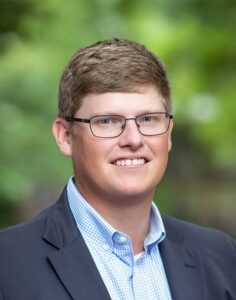
Tee Leitner
Defective Drug Recalls Lawyer
Tee Leitner is a Union County native. Tee grew up in Monroe and graduated from Monroe High School. He received his law degree from the University of Mississippi School of Law and his undergraduate degree from the University of North Carolina at Chapel Hill.
Upon graduating from law school in 2011, Tee worked in private practice and then joined the Union County District Attorney’s Office in 2012 as an Assistant District Attorney. Tee is licensed in North Carolina and in the federal court in the United States Western District of North Carolina.
Tee is an experienced trial attorney, having tried cases in district, superior and federal court. As a prosecutor, Tee tried over 30 jury trials ranging from misdemeanors to first degree murder. In 2016, Tee opened his law firm Leitner Law where he has focused his work in Criminal Defense, DWI, Family Law and Civil Litigation.
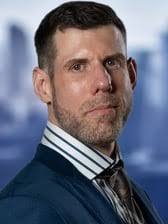
Ryan T. Smith, Esq.
Defective Drug Recalls Lawyer
the forward-thinking, innovative mind of Ryan T. Smith, the founder of RTS Law Group. In his role as CEO, Ryan is the driving force behind RTS Law Group’s commitment to the highest standards of practice and customer service.
Born and raised in Wheeling, WV, Ryan’s academic journey took him from Marshall University’s Lewis College of Business to the West Virginia University College of Law. His academic accolades include a distinguished appointment to Law Review and a substantial tenure in the WVU Clinical Law Program.
Driven by an insatiable intellectual curiosity, Ryan chose to spend considerable time during his law school years exploring the globe. His academic journey took him from the historic courts of Europe, studying in countries like Greece, Italy, France, and Spain, to the vibrant classrooms of South America, where he absorbed the local law and culture in Brazil and Argentina.
He fondly describes the thrill of hang-gliding off the formidable cliffs of Rio de Janeiro as ‘pure bliss.’ However, it wasn’t until being front and center in the historic ‘Running with the Bulls’ that Ryan’s fearless personality took center stage.
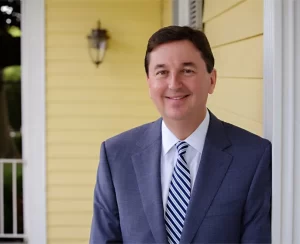
Douglas A. Petho
Defective Drug Recalls Lawyer
Attorney Douglas A. Petho is the owner and founder of Price, Petho & Associates. He is a graduate from the University of North Carolina at Chapel Hill where he earned his Bachelor of Science degree in the Administration of Criminal Justice in 1988. He earned his law degree from the University of North Carolina Chapel Hill in 1991. Mr. Petho is a native of the Charlotte area.
Mr. Petho began his trial career as an Assistant District Attorney for the 1st Judicial District of North Carolina serving under the Hon. H.P. Williams. In that position, Mr. Petho was tasked with the prosecution of both misdemeanor and felony charges in a seven- county district of Eastern North Carolina.
In 1993, attorney Petho joined the law firm founded by his predecessor Larry E. Price. Since that time Mr. Petho’s primary focus has been the litigation of plaintiff’s personal injury suits. He has successfully tried hundreds of cases to jury verdict involving automobile accidents, trucking accidents, pedestrian accidents, slip and fall accidents, animal attacks, intentional torts and work related accidents.
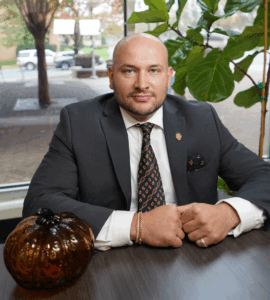
Timothy J. Pavone
Defective Drug Recalls Lawyer
Originally from New York, Timothy Pavone came to North Carolina with the goal of becoming a public servant and attorney.
After achieving this goal, Attorney Pavone knew that opening his own firm would be the best way to quickly earn a reputation in North Carolina as a dependable attorney who clients would enjoy using. He currently enjoys meeting and greeting new faces in Charlotte, NC where he lives, and also is proud to be on the North Carolina indigent attorney list in Mecklenburg County.
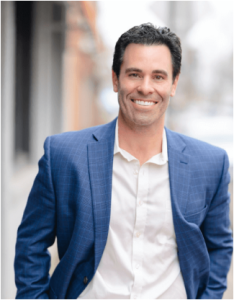
Adam Seifer
Defective Drug Recalls Lawyer
Adam started his legal career in 2000 doing transactional work representing some of the country’s largest financial institutions for a large multinational law firm in Charlotte, North Carolina. In late 2001, already contemplating a career change, Adam was a passenger in a vehicle that was struck by a drunk driver who ran a stoplight.
Since 2003, Adam has developed a reputation for taking on the Goliath insurance companies and working tirelessly to protect the rights of clients who suffered bodily injury as a result of someone else’s negligence. Adam has tried over 100 cases to jury verdict and collected more than $100M in compensation for his clients through settlements and jury verdicts in numerous courts across the country, including U.S. courts of appeals, U.S. district courts, North Carolina State Superior Court, North Carolina State District Court and the North Carolina Industrial Commission. He is a lifetime member of the Million Dollar Advocates Forum which acknowledges trial attorneys who have had jury verdicts in excess of $1M. Adam is routinely featured in Super Lawyers and Top 100 Trial Lawyers in America and numerous other publications and award listings. Adam’s cases have often been prominently featured on local and national news outlets including Sirius XM and Inside Edition and he is also frequently sought out by these outlets for his legal opinions on current legal affairs
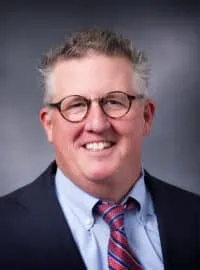
Jason E. Taylor
Defective Drug Recalls Lawyer
Jason’s academic prowess shone as he graduated from Hobart College in Geneva, NY, remarkably completing a four-year curriculum in just three years. After a brief stint in construction and roofing, he embarked on his legal path. Enrolling at American University’s Washington College of Law in Washington, D.C., he graduated with honors, laying the foundation for his legal career.
In 1993, Jason commenced his legal journey in Charlotte and later co-founded a new firm in the spring of 1996. In April 2005, he established The Law Offices of Jason E. Taylor, with offices in Charlotte, Hickory, Columbia, South Carolina, Rock Hill, South Carolina, and Greenville, North Carolina.

What Happens When You Recall Something?
Recalling a product, whether it’s food, medicine, electronics, or another item, is a critical process designed to protect consumers and address safety concerns. Here’s an in-depth look at what happens when a recall is initiated, how it unfolds, and its broader consequences.
What Is a Product Recall?
A product recall is a formal request by a manufacturer or regulatory authority to return, repair, or dispose of a product that has been found to have safety defects or does not comply with legal standards. Recalls are usually prompted by evidence that a product could cause harm due to defects, contamination, or mislabeling.
Steps Involved in a Product Recall
Incident Identification & Investigation
The first step is recognizing a safety issue, often through consumer complaints, internal tests, or regulatory findings.
The manufacturer investigates to confirm the problem, its scope, and potential risks.
Risk Assessment
The severity and potential impact are analyzed.
Decisions are made whether to recall voluntarily or as required by authorities.
Notifying Authorities and Stakeholders
Relevant regulatory bodies (like the FDA or consumer product agencies) are informed.
Internal stakeholders, such as distributors and retailers, are notified too.
Public Announcement and Customer Notification
Recall notices are issued to the public through media, company websites, and directly to affected customers when possible.
Notices include details about the defect, risks, and steps customers should take.
Removal, Return, or Repair of the Product
Consumers are usually instructed to stop using the product.
They may return it for repair, replacement, or a refund. In some cases, the item is to be disposed of safely.
Product Collection and Processing
Returned products are tracked and processed for repair, replacement, or destruction.
Detailed records are kept of the recall’s progress and effectiveness.
Corrective Actions and Debrief
An investigation into the root cause is completed.
Long-term corrective actions are put in place to prevent recurrence.
The recall process is reviewed for improvements.
Impact on Consumers
Safety Protection: Consumers are shielded from harm by removing dangerous products from circulation.
Compensation: Most companies offer repairs, replacements, or refunds.
Inconvenience: Returning or relinquishing the product may disrupt daily life, especially if alternatives are not readily available.
Consequences for Companies
Financial Costs: Includes handling returns, repairs, refunds, legal fees, and potential fines. The costs can be substantial and, in severe cases, catastrophic for smaller companies.
Reputational Damage: Negative publicity from a recall can erode consumer trust, hurt brand loyalty, and impact long-term sales.
Operational Disruption: Resources are diverted to manage the recall, potentially straining supply chains and staff morale.
Regulatory and Legal Implications
Mandatory Recalls: Authorities can enforce recalls if companies do not act voluntarily.
Legal Actions: Companies may face lawsuits and government penalties if the product caused harm or if the recall was mismanaged.
Ongoing Monitoring: Authorities often monitor the recall’s effectiveness and may require ongoing reporting until completion.
Conclusion
Recalling a product is a vital action taken to ensure public safety when issues arise with consumer goods. The process—while costly and complex—helps minimize harm, uphold consumer trust, and drive improvements in product quality and safety. For companies and consumers alike, understanding what happens during a recall is essential to navigating these challenging events responsibly and effectively