


Chalmers “Chuck” H. Barnes
Defective Drug Recalls Lawyer
Personal injury attorney Chalmers “Chuck” H. Barnes has been fighting for justice for the injured since 1974. In his 4 decades of legal experience he has successfully resolved thousands of personal injury and medical malpractice cases throughout Florida and Georgia. With his wealth of legal experience there is no medical issue in a personal injury case that he cannot handle personal injury law.
Few Attorneys in the Southeast United States have graduated Magna Cum Laude with a B.A. from Harvard University. In fact Mr. Barnes may be the only one in the Jacksonville area. Chuck followed up his Harvard undergraduate degree with a J.D. from one of the highest ranked law schools in the nation, the Georgetown Law School in Washington D.C in 1974. While there are many highly accomplished attorneys in the Jacksonville area you would be hard pressed to find another with such credentials.
Chuck is a co-founder of Barnes Cohen & Sullivan, P.A. He is a member of the Florida Bar Association, the Georgia Bar Association, U.S. District Court for the Middle District of Florida and is admitted to Federal and State Courts for both Florida and Georgia.

S. Tanner Williams
Defective Drug Recalls Lawyer
Tanner Williams is a founding partner of Williams & Yoho, P.A. A native from Clay County, Tanner spent his youth within the community. In 2011 Tanner left Clay County to attend the University of Alabama in Tuscaloosa (Roll Tide!). He graduated from Alabama in 2015, receiving his bachelor’s degree in Political Science. With a passion for the law.
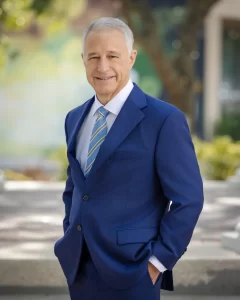
J. Scott Nooney
Defective Drug Recalls Lawyer
J. “Scott” Nooney founded Law Offices of Nooney, Roberts, Hewett & Nowicki and is the firm’s managing partner. Scott continues to command the firm’s personal injury practice and leads the team of five attorneys. Scott ensures the daily operations of the firm are attended to with special attention. He began his legal career as an Assistant State Attorney for the 4th Judicial Circuit where he prosecuted misdemeanor, felony offenses, and juvenile cases from 1987 until 1991.
Following his time at the State Attorney’s Office, Scott furthered his career in private practice with a few firms in the Jacksonville area. In 1997, Scott founded J. Scott Nooney & Associates and in 2004, he joined with Michael Roberts to form what is now the Law Offices of Nooney, Roberts, Hewett & Nowicki. Scott was born in Jacksonville, Florida and is a 4th generation Jacksonville native. He earned his undergraduate degree from Florida State University in 1984 and later earned his Juris Doctor from Florida State University in 1987. Scott resides in San Marco with his lovely wife, Erin.
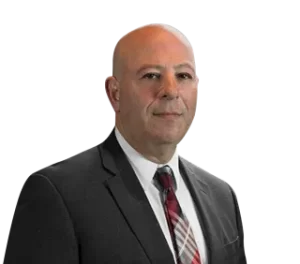
Adam Brum
Defective Drug Recalls Lawyer
Adam Brum was born in Brooklyn, New York. Mr. Brum grew up in Sarasota, Florida and graduated from The University of Florida with a B.S. in Public Relations in 1990. He graduated from The John Marshall School of Law in Chicago in January 1994 and was admitted to the Florida Bar in April of 1994.
Mr. Brum served as an Assistant State Attorney in Sarasota where he tried more than 20 criminal jury trials, and has since devoted his law practice to personal injury, maritime and insurance disputes.
He has tried more than 40 civil jury trials in both Federal and State Court. His personal injury practice focuses on: auto and trucking accidents, wrongful death, negligent security, construction accidents, slip and falls, product injuries, airplane/aviation accidents. His Maritime/Admiralty practice focuses on: boating accidents, cruise ship injuries, Jones Act, jetski accidents and drowning.
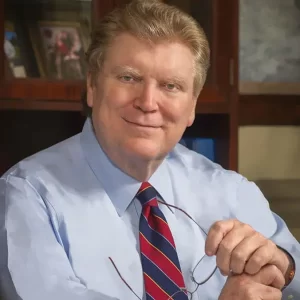
WILLIAM H. (BILL) HARRELL
Defective Drug Recalls Lawyer
Founder and Senior Partner of Harrell & Harrell P.A., William H. (Bill) Harrell was born in Lake City, Florida in 1946. Bill was the son of a career Air Force pilot and grew up in places all around the world. He attended high school at Mobile, Alabama’s University Military School where he was a stand-out athlete in basketball and football.
After completing his military service, Bill returned to the University of Florida where he was a member of the Florida Blue Key and Delta Tau Delta fraternity. He graduated college with a Bachelor’s of Science degree in Business Administration in 1971. He put himself through law school at the University of Florida while working as a deputy sheriff for the Alachua County Sheriff’s Office. In 1974, Bill graduated and was ultimately inducted into the University of Florida Hall of Fame in recognition of his leadership, athletic and academic accomplishments.

Steve Pajcic
Defective Drug Recalls Lawyer
Steve enjoys supervising all the cases in the firm. He has tried a multitude of jury trials over the years and continues to be involved in most jury selections and trials today. Steve’s reputation for always being prepared and ready for trial has led to thousands of successful settlements. He takes great pride in being able to work each day with his son and three nephews.
Steve has always had a passion for public service. He was elected to the Florida House of Representatives for six terms. Steve received 7 consecutive St. Petersburg Times Award nominations as the Most Valuable Member of the State House. He was also the Florida Education Association’s Outstanding Legislator in 1980 and 1982.
Steve developed the idea for, and was the prime sponsor of, the constitutional amendment increasing the Homestead exemption in Florida to $25,000. After losing a tight race for Governor, Steve retired from politics, but he remains active today supporting other candidates. He and his brother spearheaded the campaign of Nat Glover who was elected as the first African-American Sheriff in Jacksonville history.

Amanda Baggett
Defective Drug Recalls Lawyer
Outside of the office, Amanda dedicates her time to organizations that prioritize the needs of children and families in our community. Amanda leads Baggett Law’s annual Back-to-School Backpack Drive for local children in the community, and she regularly serves as pro bono legal counsel for families in need. She has served on various local boards and committees, including MOSH, the Early Learning Coalition of Duval, the Jacksonville Bar Association, and Jacksonville Country Day School.
Born in Hannibal, Missouri, and raised near Atlanta in Marietta, Georgia, Amanda attended the University of Georgia, where she earned a degree in advertising. She went on to earn her law degree at Mercer University in 2003. During law school, Amanda broadened her legal education by attending classes at the University of Florida’s Levin College of Law and the University of Notre Dame in London.


Who Issues a Drug Recall in Pharmacy?
Drug recalls are a vital aspect of pharmaceutical safety and public health. They serve as a mechanism to remove potentially harmful, defective, or non-compliant medications from the market, thereby protecting patients and maintaining trust in the healthcare system. But who exactly has the authority to issue a drug recall in pharmacy, and how does the process unfold? This article explores the key players, regulatory frameworks, and the detailed steps involved in drug recalls, with a focus on major jurisdictions like the United States and India.
Understanding Drug Recalls
A drug recall is an action taken to remove a pharmaceutical product from the market, supply chain, or patient use due to identified risks. These risks can range from contamination, incorrect labeling, and manufacturing defects to the discovery of adverse effects not previously known. Drug recalls are classified by the severity of the risk they pose, and the process is governed by strict regulations to ensure public safety.
Who Can Issue a Drug Recall?
The authority to issue a drug recall does not rest with a single entity. Instead, it is a collaborative process involving several stakeholders, each with distinct responsibilities:
1. Manufacturers and Distributors
In most cases, the manufacturer or distributor of a drug is the first to identify a problem. This could happen through internal quality checks, customer complaints, or post-marketing surveillance. When a defect or risk is discovered, the company often initiates a voluntary recall. This proactive approach is encouraged by regulatory authorities, as it demonstrates corporate responsibility and a commitment to public safety.
Reasons for Voluntary Recalls:
Detection of contamination (microbial, chemical, or particulate)
Incorrect or misleading labeling or packaging
Stability issues leading to reduced efficacy or increased toxicity
Discovery of undisclosed side effects or adverse reactions
Manufacturing errors, such as incorrect dosage or formulation
2. Regulatory Authorities
Government agencies play a crucial role in overseeing and, when necessary, mandating drug recalls. The specific agency depends on the country:
United States: The Food and Drug Administration (FDA)
The FDA is the primary regulatory body responsible for drug safety in the U.S. While most recalls are voluntary, the FDA has the authority to request or even order a recall if a manufacturer fails to act promptly or if the risk is particularly severe. The FDA monitors the recall process, ensures compliance, and communicates risks to the public.
India: Central Drugs Standard Control Organization (CDSCO)
In India, the CDSCO, along with State Drug Regulatory Authorities, oversees drug recalls. If a drug is found to be substandard, adulterated, spurious, or associated with serious adverse effects, the CDSCO can direct the manufacturer or distributor to recall the product. In urgent cases, a Rapid Alert System is used to quickly disseminate information and coordinate the recall.
Other Countries
Other nations have their own regulatory bodies, such as the European Medicines Agency (EMA) in Europe, the Medicines and Healthcare products Regulatory Agency (MHRA) in the UK, and similar organizations worldwide. All have the authority to mandate recalls and ensure compliance with safety standards.
The Drug Recall Process
The process of recalling a drug typically follows a structured pathway, regardless of the country:
1. Detection of a Problem
A recall can be triggered by various sources:
Routine quality control tests by the manufacturer
Reports from healthcare professionals or patients
Inspections by regulatory authorities
Post-marketing surveillance data
2. Risk Assessment
Once a potential issue is identified, a risk assessment is conducted to determine the severity and scope of the problem. Recalls are classified based on the level of risk to public health:
Class I: Serious health risks or death
Class II: Temporary or medically reversible adverse health consequences
Class III: Unlikely to cause adverse health consequences
3. Notification and Communication
The manufacturer or regulatory authority notifies all stakeholders, including wholesalers, pharmacies, healthcare professionals, and sometimes directly to patients. Public announcements may be made through press releases or official websites.
4. Execution of the Recall
The affected product is removed from the supply chain at all levels—manufacturer, distributor, pharmacy, and sometimes even from patients’ homes. The recall may involve returning the product to the manufacturer, destroying it, or other corrective actions.
5. Follow-Up and Reporting
Regulatory authorities monitor the recall’s effectiveness, ensuring that all affected products are accounted for and that corrective measures are in place to prevent recurrence. The outcome is documented and reported for transparency and future reference.
The Role of Pharmacies in Drug Recalls
Pharmacies are on the front lines of drug recalls. When notified of a recall, pharmacists must:
Remove the affected product from shelves immediately
Notify patients who may have received the recalled drug
Provide guidance on alternative treatments or next steps
Document the recall action for regulatory compliance
Pharmacists also play an educational role, helping patients understand the reason for the recall and addressing any concerns about their health or ongoing treatment.
Conclusion
Drug recalls are a critical safeguard in the pharmaceutical industry, ensuring that only safe, effective, and high-quality medicines remain available to the public. The authority to issue a drug recall is shared between manufacturers (who often initiate voluntary recalls) and regulatory agencies (who can mandate recalls when necessary). The process is comprehensive, involving detection, assessment, communication, execution, and follow-up.
Ultimately, the collaborative efforts of manufacturers, regulatory authorities, and pharmacies are essential to protecting public health and maintaining confidence in the healthcare system. By understanding who issues a drug recall and how the process works, healthcare professionals and patients alike can better appreciate the importance of vigilance, transparency, and swift action in safeguarding medication safety.