


Seth J. Bloom, Esq
Defective Drug Recalls Lawyer
Seth J. Bloom, Esq. moved to New Orleans in 2000 to attend Loyola University Law School, drawn by family ties and a sense of purpose. After graduating with his Juris Doctor and serving on the Honor Board, he began his legal career working with criminal defense and personal injury attorneys, as well as in real estate investment—experience that would later shape his own practice personal injury law.
In 2004, Seth founded Bloom Legal in the Warehouse District of New Orleans. Just one year later, Hurricane Katrina devastated the city. Bloom Legal quickly became a trusted legal resource during the recovery, helping residents and small businesses navigate everything from insurance disputes to criminal and other legal matters. That period defined the firm’s mission: to provide responsive, community-rooted legal representation when it’s needed most.
Over the next two decades, Bloom Legal built a reputation for strong advocacy in criminal defense, personal injury, construction law, and other civil litigation. Seth’s dedication to accessible, client-first service earned him the respect of peers and the trust of clients across the region.
Richard J. Arsenault
Defective Drug Recalls Lawyer
Richard Arsenault has been recognized as one of America’s 50 Most Influential Trial Lawyers by Trial Lawyer Magazine. He has participated in over 25 multidistrict litigation proceedings and currently serves as Co-Lead Counsel in the Actos MDL where a jury rendered a historic $9 billion dollar punitive damage verdict which has been reported as one of the nation’s largest personal injury verdicts.
The New York Times has referred to Arsenault as a “big player” in the legal community. The Wall Street Journal has described him as having “national notoriety” and as a “big gun” among attorneys in competition for national leadership roles. Business Week has referred to him as “a Dean of the Louisiana tort bar”, USA Today featured him as a member of the “Legal Elite” and the New Orleans Times Picayune has referred to him as “an authority on class actions.”
Richard has over 300 articles and presentations to his credit and has authored many Law Review articles including one published in Federal Courts Law Review. Among other writings, he co-authored the chapter on Multidistrict Litigation in an ABA treatise. Richard was also asked by Judge Heyburn, JPML Chair, to participate in the Panel’s “Multidistrict Litigation Study Project”. He has personally participated in negotiating over $3.5 billion in complex litigation settlements in the last five years.
Erik M. Tadda
Defective Drug Recalls Lawyer
Erik Tadda, has been practicing law since 1991. For over 20 years he has devoted himself to the practice of helping people get compensation when their injuries have been the result of another’s negligence.
Affordable Legal Aid – Free Initial Consultations
At The Tadda Law Firm, we work hard to get you the compensation you deserve. Call us today to schedule a free initial consultation. Find out how we can help you.
Areas of Practice
- Personal injury — plaintiff
- Motor vehicle accidents — plaintiff
- Auto accidents
- Truck accidents
- Bicycle and pedestrian accidents
- Workers’ compensation
- Neck, back, knee and shoulder injuries
- Wrongful death
- Admiralty and maritime law
- Premises liability
- Product liability
- Toxic torts
Bar Admissions
- Louisiana, 1991
- U.S. District Court Middle District of Louisiana, 1994
- U.S. District Court Eastern District of Louisiana, 1991
- U.S. Court of Appeals 5th Circuit, 1993

Richard C. Broussard
Defective Drug Recalls Lawyer
Richard C. Broussard was born in Lafayette, Louisiana on April 1, 1949 and received a Bachelor of Science degree in Economics in 1971 from the University of Southwest Louisiana (now the University of Louisiana at Lafayette) and a Juris Doctor in 1974 from Louisiana State University. He also served as an officer in the United States Air Force Reserves from 1971 – 1975. He is currently a partner in the firm of Broussard, David & Moroux.
Since his admission to the Louisiana Bar in 1974, Mr. Broussard has been involved in personal injury and wrongful death litigation with emphasis on offshore/maritime, aviation, products liability, industrial and automobile accident claims. His areas of practice include: Products Liability Law, Maritime Personal Injury Law, Aviation Litigation, and General Personal Injury Law. Mr. Broussard is an “AV” rated attorney by Martindale-Hubbell (highest rating possible). Mr. Broussard was board certified by the National Board of Trial Advocacy in Civil Trial Advocacy.
Scott Mansfield
Defective Drug Recalls Lawyer
With first-chair jury trial and bench trial experience, Scott has argued in numerous Louisiana and federal courts and has advocated for clients throughout the state. Scott has represented clients, most of which are individuals injured through no fault of their own, in personal injury cases and numerous business/civil litigation cases on behalf of Fortune 500 companies. Scott’s clients hail from many different states, including Louisiana.
After several years of practicing law with one of Louisiana’s oldest and most respected firms, Scott formed Mansfield Melancon with other experienced and trusted lawyers with the goal of providing each individual client with personalized attention and a dedicated team of Baton Rouge personal injury lawyers who understand their issues and advocate aggressively for all of the firm’s clients.
Scott prides himself on using his prior experience representing insurance companies and corporations to now take up the fight for individuals hurt and injured by no fault of their own and hold insurance companies and corporations accountable. Scott prides himself on his attention to detail, dedication to his clients, and solving problems for his clients to make their lives better.

A. Spencer Gulden
Defective Drug Recalls Lawyer
For over 30 years, Mr. A. Spencer Gulden has dedicated his legal career to helping injured people get the recoveries they deserve. He has represented both severely injured accident victims and a significant insurance company, giving him the experience needed to understand the full scope of personal injury litigation and how he can best help his clients successfully navigate the process.
Mr. Gulden has handled hundreds of cases for victims injured in car wrecks, offshore accidents, workplace accidents, and slip and fall accidents, and more. With Mr. Bart’s blessing and encouragement, Mr. Gulden recently took a year’s leave from the firm to serve the people of New Orleans, working in the Orleans Parish District Attorney’s Office, prosecuting criminals and seeking justice for victims of crime.
Mr. Gulden received his Juris Doctor from Louisiana State University. He is a member of the Louisiana State Bar Association and a regular speaker for the Louisiana Center for Law and Civic Education’s Judges and Lawyers in the Classroom program. He is a longtime resident of Algiers Point along with his wife and children, who are all proud to call New Orleans home. Mr. Gulden originally joined Morris Bart’s law firm in 2018.
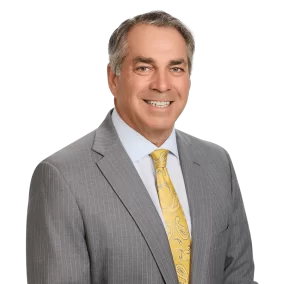
David Laborde
Defective Drug Recalls Lawyer
“One young lady was paralyzed and having spent many hours with her through recovery, though adjusting to a new lifestyle, it made me appreciate how important it is that we can make a person’s life more comfortable in a terrible situation.” David has represented individuals in all facets of litigation, from filing the initial claim in state and federal courts, through trial, through courts of appeal and through the Louisiana Supreme Court. He has been admitted to practice in Louisiana State District Courts, Louisiana Appellate Courts, the Louisiana Supreme Court and in federal courts, including the Western, Middle and Eastern District of Louisiana, the Southern District of Texas and the United States Fifth Circuit Court of Appeals.


Which Entity Can Issue a Recall?
A product recall is a critical process designed to protect consumers from potentially dangerous, defective, or non-compliant products. Recalls serve as an essential safety net in the marketplace, ensuring that products which pose risks to health, safety, or legal compliance are swiftly removed from circulation or corrected. But who exactly has the authority to issue a recall? The answer depends on the type of product, the legal framework in place, and the circumstances surrounding the defect or risk. This article explores the various entities that can initiate a recall, the mechanisms by which recalls are issued, and the importance of this process for public safety and consumer trust.
1. Manufacturers and Distributors: The First Line of Defense
In most cases, the manufacturer or distributor of a product is the first entity to initiate a recall. This is known as a voluntary recall. Companies are often motivated to act quickly when they discover a defect, not only to protect consumers but also to safeguard their reputation and minimize legal liability.
Why Do Companies Issue Voluntary Recalls?
Consumer Safety: The primary reason is to prevent harm to consumers. If a manufacturer becomes aware of a defect that could cause injury, illness, or death, they have a moral and often legal obligation to act.
Regulatory Compliance: Companies are required to comply with safety standards and regulations. Failing to recall a dangerous product can result in fines, lawsuits, and even criminal charges.
Brand Reputation: Proactively recalling a product can help preserve consumer trust and demonstrate corporate responsibility.
Legal Liability: Voluntary recalls can mitigate potential damages in lawsuits by showing that the company took reasonable steps to address the issue.
How Do Companies Initiate Recalls?
Manufacturers and distributors typically follow a structured process:
Identification: The defect or risk is identified through internal testing, consumer complaints, or incident reports.
Assessment: The company assesses the severity of the risk and the scope of the problem.
Notification: Regulatory agencies, distributors, retailers, and sometimes the public are notified.
Execution: The recall is carried out, which may involve removing products from shelves, issuing refunds or replacements, and providing instructions for safe disposal or repair.
2. Regulatory Agencies: Oversight and Enforcement
While most recalls are voluntary, regulatory agencies play a crucial role in overseeing product safety and can mandate recalls when necessary. These agencies are empowered by law to protect public health and safety, and they monitor compliance across various industries.
Key Regulatory Agencies and Their Roles
United States
Food and Drug Administration (FDA): Oversees recalls of food, pharmaceuticals, medical devices, and cosmetics. The FDA can request or order a recall if a product poses a significant health risk and the manufacturer fails to act.
Consumer Product Safety Commission (CPSC): Responsible for consumer products such as toys, electronics, and household goods. The CPSC can negotiate voluntary recalls or, in rare cases, order mandatory recalls.
National Highway Traffic Safety Administration (NHTSA): Handles recalls of motor vehicles and automotive equipment.
European Union
European Food Safety Authority (EFSA): Monitors food safety and coordinates recalls across member states.
Rapid Alert System for Food and Feed (RASFF): Enables swift exchange of information about food safety risks and recalls.
National Regulatory Bodies: Each EU country has its own agencies that can mandate recalls based on EU directives.
India
Central Drugs Standard Control Organization (CDSCO): Regulates pharmaceuticals and medical devices.
Food Safety and Standards Authority of India (FSSAI): Oversees food safety and can mandate recalls for unsafe products.
Bureau of Indian Standards (BIS): Regulates standards for various products and can order recalls for non-compliance.
How Do Regulatory Agencies Issue Recalls?
Investigation: Agencies investigate reports of unsafe products from consumers, healthcare professionals, or companies.
Risk Assessment: They assess the severity and potential impact of the defect.
Recall Request or Order: Agencies may request a voluntary recall or, if the risk is severe and the company does not act, issue a mandatory recall order.
Public Notification: Agencies often issue press releases and maintain recall databases to inform the public.
3. Courts and Consumer Protection Authorities: Legal Mandates
In certain situations, especially when a company refuses to act or when the risk is particularly grave, courts or consumer protection authorities can intervene and mandate a recall.
When Do Courts or Authorities Step In?
Non-Compliance: If a manufacturer ignores regulatory requests or fails to recall a dangerous product, authorities can seek legal action.
Serious Risk: For products posing an imminent threat to public health or safety, immediate legal intervention may be necessary.
Consumer Complaints: High-profile consumer complaints or class-action lawsuits can prompt judicial orders for recalls.
Examples of Legal Authority
Consumer Protection Act (India): Allows state and national commissions to order recalls and require companies to submit recall plans.
EU Product Safety Directives: National authorities can order recalls and ban sales of unsafe products.
U.S. Courts: Can issue injunctions requiring companies to recall products as part of litigation settlements.
4. The Recall Process: From Detection to Resolution
Regardless of who initiates the recall, the process generally involves several key steps:
Detection: The defect or risk is discovered.
Notification: Relevant parties (regulators, retailers, consumers) are informed.
Execution: The recall is carried out—products are removed, repaired, replaced, or refunded.
Communication: Ongoing updates are provided to stakeholders.
Follow-Up: Effectiveness of the recall is monitored, and corrective actions are implemented.
5. Conclusion: Shared Responsibility for Safety
The authority to issue a recall is shared among manufacturers, regulatory agencies, courts, and consumer protection authorities. While most recalls are initiated voluntarily by companies, regulatory and legal mechanisms ensure that dangerous products can be swiftly removed from the market when necessary. This multi-layered approach protects consumers, upholds public trust, and reinforces the importance of safety and accountability in the marketplace.